
Six weeks ago, our trading platform’s AI made an awful prediction error. The model was sophisticated, used well-crafted data, but it couldn’t explain why it failed. That’s when we realized we were asking the wrong question.
Not long ago, the dream of AI seemed simple enough: build one incredibly powerful model, feed it massive amounts of data, and let it answer everything. That idea took off spectacularly with the explosion of large language models like ChatGPT. Overnight, businesses everywhere began plugging this single-model AI into everything—customer service, coding, content creation—expecting the model alone to handle it all.
But reality quickly caught up.
Picture this scenario: a high-stakes trading platform that previously relied on one model to predict markets. The model did well, but errors were costly, and explanations for its predictions were vague at best. We needed more than an oracle—we needed a team of specialized experts.
Imagine asking a single person to master finance, medicine, software engineering, and psychology simultaneously. Impossible, right? Yet that’s precisely what we’ve demanded from these single-model AI systems. They become overgeneralized, struggle with nuance, and lack specialized insights. No matter how vast their knowledge, they often miss critical context.
The solution wasn’t building a bigger brain—it was building a better team.
So, VRAISON built exactly that.
We developed multiple agents, each with a clearly defined, specific role:
- A Strategic Analyst who scans market indicators for long-term signals.
- A Momentum Specialist who quickly identifies immediate opportunities.
- A vigilant Risk Manager ensuring every decision meets strict safety guidelines.
- A Market Context Agent reading the subtle shifts of sentiment and macroeconomic movements.
- A Decision Coordinator who synthesizes the inputs, carefully orchestrating their insights into a clear, actionable decision.
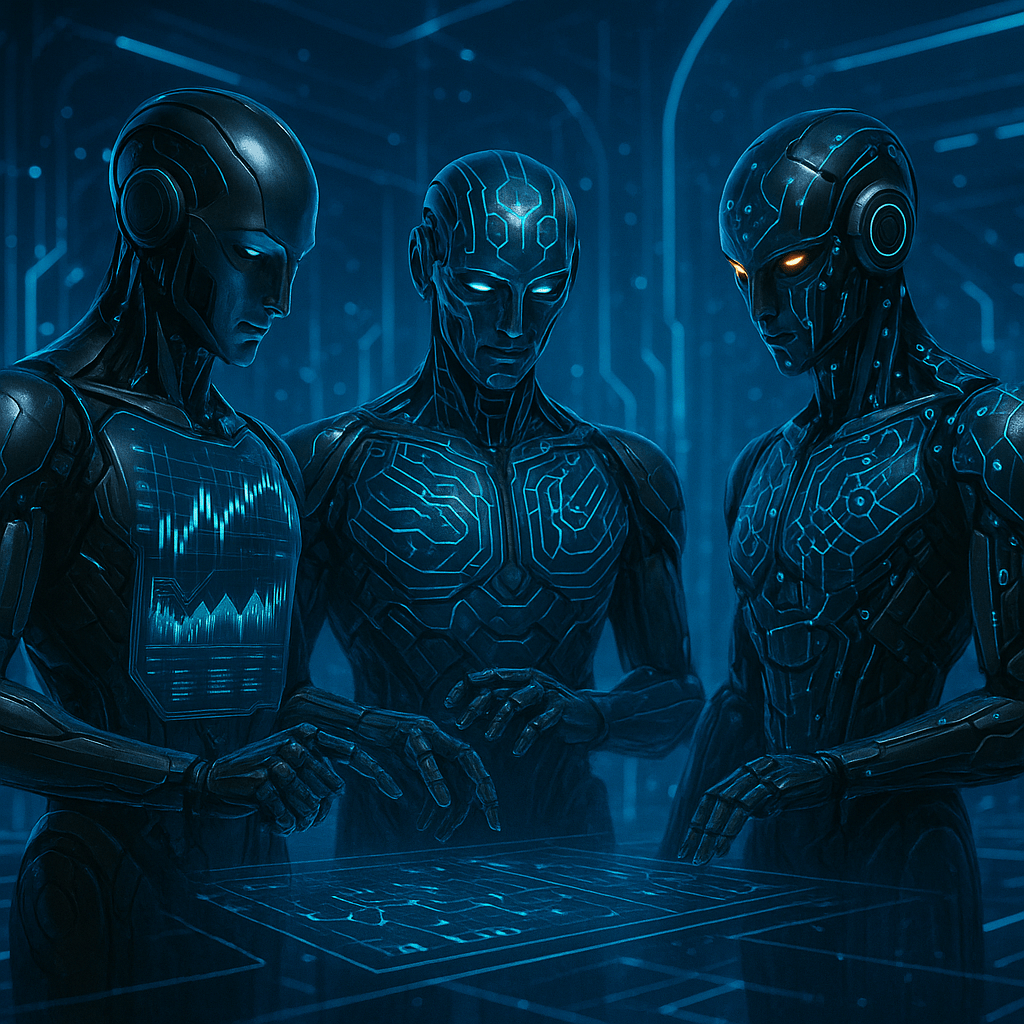
These agents don’t just work in parallel—they debate, challenge each other’s assumptions, and reach consensus through structured dialogue.
The results? Prediction accuracy improvements, false positives dropped, and—crucially—every decision now came with a clear explanation.
The “team” now catches nuances no single model ever could. Each agent provides checks and balances, creating layered analysis. Predictions became not only more accurate but explainable—the system could detail exactly why a decision was made, bringing transparency to complex financial actions.
This isn’t just about better technology—it’s a fundamental shift in how we think about intelligence. Just as human societies thrive on collaboration, specialization, and teamwork, so too will AI.
Imagine applying this multi-agent concept broadly:
- In banking, specialized AI agents ensuring compliance, spotting fraud, and understanding customers deeply.
- In software development, dedicated agents streamlining code reviews, suggesting optimal architectures, and auto-generating clear, accurate documentation.
- In operations, intelligent agents collaboratively triaging alerts, routing tasks, and managing escalations.
This new generation of AI reflects the complexity and richness of the world we inhabit. It acknowledges that true intelligence is not solitary, but collective.
The future isn’t a single super-intelligent model trying—and inevitably failing—to master everything. Instead, the future belongs to teams of specialized AI minds, working together in harmony, each amplifying the strengths of the others.
The promise of AI isn’t artificial genius. It’s artificial teamwork, perfectly orchestrated.

 VRAISON AI BLOG - By Pete Corcoran
Leave a comment